Pipedrive Review (2026) — Simple Sales CRM or Too Simple for Growth?
What we liked
- Visual pipeline is genuinely intuitive — drag-and-drop deal management with customizable stages means sales teams can start selling on day one without training
- Seat-based pricing with no contact limits — unlike HubSpot's contact-based billing, Pipedrive charges per user only, so growing your database never increases your bill
- AI Sales Assistant analyzes deals across all plans — win probability predictions, stalling deal alerts, and next-best-action recommendations included even on the $14/month Lite tier
- Activity-based selling methodology keeps teams focused — the platform organizes around scheduled actions rather than static contact records, reducing the risk of deals going cold
- 100,000+ companies trust it — validated by 4.3/5 on G2 (3,000+ reviews) and 4.5/5 on Capterra (3,000+ reviews), with sales simplicity consistently cited as the top differentiator
What we didn't
- No free tier — unlike HubSpot or Zoho CRM, Pipedrive offers only a 14-day trial, making evaluation harder for budget-constrained teams
- No built-in marketing or service tools — Pipedrive is sales-only, so teams needing email marketing, support tickets, or content management must integrate separate platforms
- Automation locked behind Growth plan — the $14/month Lite tier has zero workflow automation, email sync, or forecasting, making it a pipeline visualizer rather than a full CRM
- Smaller integration ecosystem — 500+ marketplace apps versus HubSpot's 2,000+ or Salesforce's 3,000+ limits connectivity for complex tech stacks
- Add-on costs stack quickly — LeadBooster ($32.50/company/month), Campaigns, Projects, and Web Visitors are separate charges that can double the effective per-seat cost
Pipedrive is the CRM that 100,000+ sales teams chose specifically because it does less — no marketing hub, no service desk, no content management system bolted on. Just pipeline management, built by salespeople who were frustrated with the CRMs they were forced to use.
We analyzed published benchmarks, aggregated reviews from 6,000+ verified G2 and Capterra users, documented pricing across all four tiers, and current feature capabilities to determine whether Pipedrive delivers enough value in 2026 for sales teams that want focus over breadth. No vendor talking points. No inflated praise. Just data.
The analysis reveals a CRM with clear strengths (visual simplicity, seat-based pricing, AI on all plans) and real trade-offs (no marketing tools, limited Lite tier, add-on cost creep) that affect different team sizes in very different ways.
In this review, you'll learn:
- What Pipedrive's visual pipeline actually does differently from competing CRMs
- How the AI Sales Assistant helps teams close deals — and where the platform falls short
- Where Pipedrive's pricing stays competitive and where add-ons push costs higher
- How Pipedrive compares to HubSpot, Salesforce, and Zoho on documented metrics
- Which sales teams should choose Pipedrive — and which should look elsewhere
Let's get into it.
What Do You Actually Get With Pipedrive?
Pipedrive is a sales-focused CRM platform built around visual pipeline management and activity-based selling — with AI-powered deal insights, workflow automation on higher tiers, and 500+ marketplace integrations. Pricing starts at $14/user/month for Lite, scaling to $79/user/month for Ultimate, with no contact-based billing on any plan.
| Feature | Details |
|---|---|
| Category | Sales CRM |
| Our Rating | 4.2/5 |
| G2 Rating | 4.3/5 (3,000+ reviews) |
| Capterra Rating | 4.5/5 (3,000+ reviews) |
| Best For | Sales teams wanting visual pipeline management without CRM bloat |
| Customers | 100,000+ companies globally |
| Starting Price | $14/user/mo (Lite, annual billing) |
| Free Tier | No — 14-day free trial only |
| AI Features | AI Sales Assistant (all plans), Insights AI, Agentic AI |
| Integrations | 500+ apps in marketplace |
| Founded | 2010 (Tallinn, Estonia); HQ in New York |
| Ownership | Vista Equity Partners (majority stake since 2020, $1.5B valuation) |
What Makes Pipedrive's Visual Pipeline Different From Other CRMs?
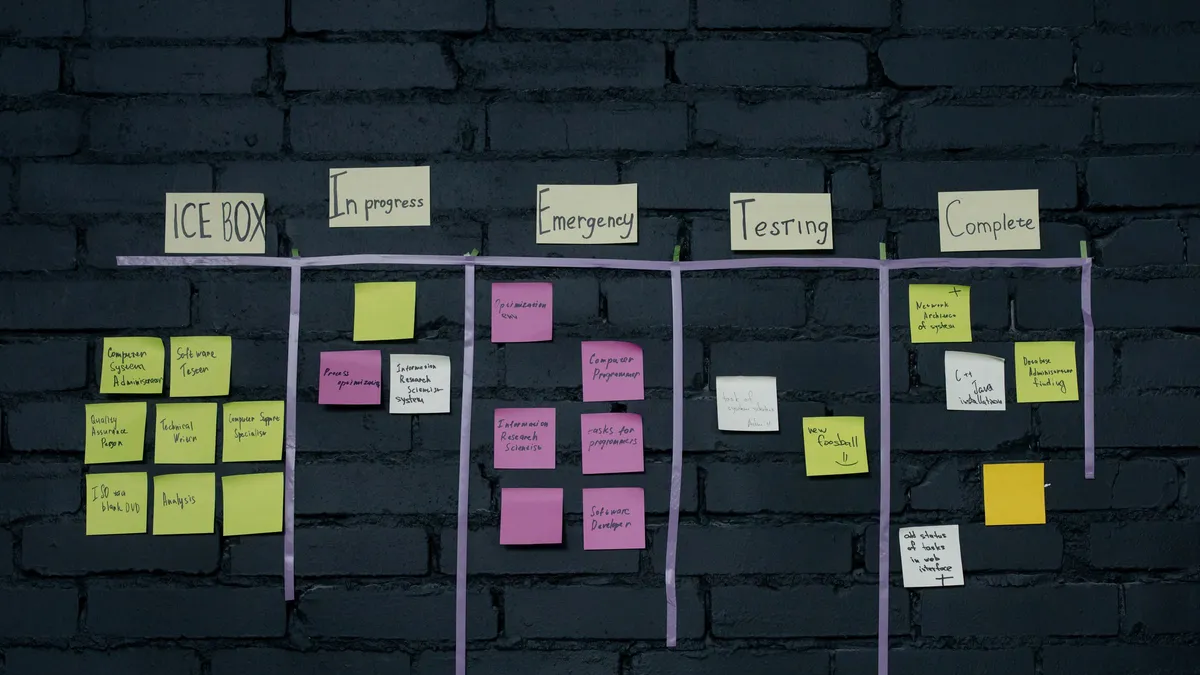
Pipedrive's core design philosophy is activity-based selling — the platform organizes around what a salesperson needs to do next, not just where a contact sits in a database. The visual pipeline uses a Kanban-style drag-and-drop board where deals move through customizable stages, with color-coded activity indicators showing which deals have overdue actions, upcoming tasks, or no scheduled follow-ups at all.

For solo founders and freelancers, Pipedrive's pipeline provides immediate clarity that spreadsheets cannot match — every open deal is visible with its current stage, expected close date, and next scheduled action. No training required. For sales managers overseeing 5-20 reps, the pipeline view scales into a team-wide dashboard where deal rot (stalled opportunities with no recent activity) becomes instantly visible rather than buried in a spreadsheet tab. For operations leaders evaluating CRM adoption, Pipedrive's design simplicity translates directly to adoption speed — G2 reviewers consistently cite ease of use as the platform's top differentiator, with the visual pipeline specifically praised for reducing onboarding friction.
Pipedrive supports unlimited custom pipelines on all plans, meaning teams can maintain separate visual boards for different products, regions, or sales processes without hitting tier restrictions — a feature that HubSpot gates behind paid tiers and Salesforce requires configuration to replicate.
How Does Pipedrive's AI Sales Assistant Help Close Deals?
Pipedrive's AI Sales Assistant analyzes deal history, contact interactions, and email activity to surface actionable recommendations — available on all plans including the $14/month Lite tier. The assistant predicts win probability for open deals, flags opportunities that are stalling or have no scheduled activity, and recommends next-best actions based on patterns from previously won deals.

Beyond the core assistant, Pipedrive has expanded its AI capabilities significantly since 2024. Insights AI lets users describe a chart or metric in plain English and the system builds it from pipeline data — eliminating the need to manually configure report filters. Agentic AI provides automatic call and meeting summaries, and the Pulse prospecting toolkit helps teams identify and prioritize outbound opportunities.
For individual sales reps, the AI assistant functions as an always-on coach that catches deals slipping through the cracks before a manager has to point them out. For data-driven sales leaders, Insights AI removes the reporting bottleneck — instead of building dashboards manually or waiting on an analyst, managers can ask questions in natural language and get visual answers from live pipeline data. Our AI tool adoption rates report tracks how quickly sales teams are integrating these AI capabilities into daily workflows.
How Much Does Pipedrive Cost in 2026?
Pipedrive restructured its plans in July 2025, moving from five tiers (Essential through Enterprise) to four: Lite, Growth, Premium, and Ultimate. All plans use per-seat pricing with no contact limits — a significant advantage over platforms that charge based on database size.

| Plan | Annual Price | Key Additions | Best For |
|---|---|---|---|
| Lite | $14/user/mo | Visual pipeline, AI assistant, 500+ integrations | Solopreneurs and tiny teams |
| Growth | $39/user/mo | Workflow automation, email sync, forecasting | Small teams ready to automate |
| Premium | $49/user/mo | Lead scoring, Smart Docs, e-signatures, phone support | Scaling sales organizations |
| Ultimate | $79/user/mo | Audit logs, advanced permissions, unlimited reports | Large or compliance-heavy teams |
The hidden cost most teams miss: Pipedrive's base plans are competitively priced, but add-ons can significantly increase the total bill. LeadBooster (chatbot, live chat, prospector with 400M+ profiles, and web forms) costs $32.50/company/month. Campaigns, Projects, and Web Visitors are separate add-ons with their own pricing. A 10-person team on Growth with LeadBooster pays $422.50/month — not $390. Run these numbers through our AI tool ROI calculator to see whether the investment pays back at your deal volume.
For context on how Pipedrive's pricing compares to the broader market, our AI marketing tool pricing index tracks current rates across all major CRM platforms.
How Does Pipedrive Compare to HubSpot, Salesforce, and Zoho?
Pipedrive wins on pure sales simplicity and transparent pricing; HubSpot wins on platform breadth; Salesforce wins on enterprise customization; Zoho wins on price-to-feature ratio. The right choice depends on whether a team needs a focused sales tool or a unified platform.

| Dimension | Pipedrive | HubSpot | Salesforce | Zoho CRM |
|---|---|---|---|---|
| Starting Price | $14/user/mo | Free / $20/seat/mo | $25/user/mo | Free (3 users) |
| Top-Tier Price | $79/user/mo | $150/seat/mo | $175/user/mo | $52/user/mo |
| Free Tier | No (14-day trial) | Yes (1,000 contacts) | No | Yes (3 users) |
| Contact Billing | Seat-based only | Contact + seat-based | Seat-based | Seat-based |
| Marketing Tools | No (add-on only) | Full marketing hub | Marketing Cloud | Marketing automation |
| Service Tools | No | Full service hub | Service Cloud | Help desk included |
| Integrations | 500+ | 2,000+ | 3,000+ | 900+ |
| Best For | Pure sales teams | All-in-one SMBs | Enterprise scale | Budget-conscious |
Pipedrive vs HubSpot is the most common comparison for SMB sales teams. Pipedrive costs less for pure pipeline management — a 10-person team on Pipedrive Growth ($390/month) pays far less than the same team on HubSpot Professional ($1,000/month plus mandatory $1,500 onboarding). But HubSpot bundles marketing automation, a service desk, and content management that Pipedrive does not offer. Teams that only need sales pipeline management save significantly with Pipedrive; teams wanting a single platform for everything need HubSpot.
Pipedrive vs Salesforce is a question of scale. Pipedrive's simplicity becomes a limitation for organizations with 50+ users needing custom objects, complex approval workflows, or deep ERP integrations. Salesforce handles that complexity — at 2-4x the cost and significantly longer implementation time.
Which Teams Should Choose Pipedrive?
Sales-focused teams of 1-50 who prioritize pipeline visibility and deal velocity over platform breadth get the most value from Pipedrive. Teams needing unified marketing and service should look elsewhere.
If you're a solo founder or freelancer, Pipedrive's Lite plan at $14/month provides more pipeline structure than any spreadsheet while costing less than most competitors' entry tiers. The AI Sales Assistant — included even at this price — flags deals going cold before they die. The main gap: Lite has no automation or email sync, so expect to upgrade to Growth once manual follow-up tracking becomes a bottleneck. Use our LTV calculator to model when upgrading to Growth pays for itself based on your average deal sizes.
For sales teams of 5-20 reps, Growth ($39/user/month) is where Pipedrive becomes a genuine sales platform rather than a pipeline visualizer. Workflow automation eliminates repetitive tasks — auto-assigning deals, triggering follow-up emails, updating stages based on activity. Email sync with open tracking tells reps exactly when a prospect reads their message. Forecasting gives managers predictive pipeline views. For teams in this range also evaluating other options, our best CRM for small business guide covers where Pipedrive ranks against HubSpot, Salesforce, and Zoho for small teams.
For mid-market sales organizations (20-50 reps), Premium adds lead scoring and Smart Docs — critical for teams processing high deal volumes that need automated lead prioritization and streamlined document workflows. Phone support at this tier also matters for organizations without dedicated CRM administrators.
For teams larger than 50, evaluate carefully. Pipedrive's 500+ integrations may not cover every enterprise tool, marketing and service teams will need separate platforms, and organizations with complex compliance requirements should consider whether Ultimate's audit logs and permissions meet their standards — or whether Salesforce or HubSpot Enterprise offers the governance depth they actually need.
Is Pipedrive Worth the Investment in 2026?
Based on our independent analysis of aggregated reviews from 6,000+ verified G2 and Capterra users, published benchmarks, and current pricing data, Pipedrive earns a 4.2/5 rating. Pipedrive is the best CRM for sales teams that want pipeline clarity without platform bloat — genuinely strong on visual simplicity, transparent pricing, and AI-powered deal insights, but limited by the absence of marketing and service tools and a smaller ecosystem than its major competitors.
Rating: 4.2/5 (assessed July 2026 — reflects the July 2025 plan restructuring and AI Sales Assistant expansion)
Pipedrive's visual pipeline management remains its defining strength. The activity-based selling methodology — organizing around what needs to happen next rather than static contact records — directly addresses the most common reason sales deals stall: lack of follow-up. 100,000+ companies have validated this approach, and the G2 and Capterra ratings (4.3/5 and 4.5/5 respectively) reflect genuine user satisfaction with the core sales experience.
The pricing model is refreshingly straightforward. Seat-based billing with no contact limits means Pipedrive's cost scales with team size, not database growth — the opposite of HubSpot's contact-based approach that penalizes successful lead generation. At $14-79/user/month across four tiers, Pipedrive undercuts both HubSpot Professional and Salesforce at every comparable feature level.
But the trade-offs are real. Pipedrive handles sales and nothing else. Teams needing email marketing, customer support, or content management must integrate separate platforms — adding cost, complexity, and potential data silos that unified platforms like HubSpot eliminate by design. The Lite tier's lack of automation makes it a pipeline tracker rather than a CRM, and add-on costs (LeadBooster, Campaigns, Projects) can push the effective price well beyond the base seat rate.
Is Pipedrive worth it? For dedicated sales teams that measure success by deals closed rather than campaigns launched, Pipedrive delivers the clearest pipeline visibility at the most transparent price point in the CRM market. For teams wanting marketing, sales, and service unified, HubSpot or ActiveCampaign remain stronger choices despite higher costs.
Frequently Asked Questions
Is Pipedrive good for small businesses? Pipedrive is one of the strongest CRM options for small sales teams. The Lite plan starts at $14/user/month with unlimited contacts and deals, the visual pipeline requires minimal training, and the AI Sales Assistant is included on all tiers. The main limitation is that Pipedrive handles sales only — small businesses needing email marketing, customer support, or content management will need separate tools or should consider HubSpot or Zoho CRM instead.
How does Pipedrive compare to HubSpot? Pipedrive is a pure sales CRM while HubSpot is an all-in-one platform covering marketing, sales, service, and content. Pipedrive costs $14-79/user/month with no contact-based billing, making it significantly cheaper for growing databases. HubSpot offers a free tier and deeper marketing automation but costs $20-150/seat/month with mandatory onboarding fees at higher tiers. Choose Pipedrive if your team only needs pipeline management; choose HubSpot if you want marketing and service unified with sales.
Does Pipedrive have AI features? Pipedrive includes an AI Sales Assistant on all plans that analyzes deals, predicts win probability, flags stalling opportunities, and recommends next actions. Growth and higher plans add Insights AI for natural-language report generation and AI-powered email tools. Pipedrive also offers Pulse, a prospecting toolkit, and automatic call and meeting summaries through its Agentic AI features.
Sources
- Pipedrive Pricing — Current plan pricing across Lite, Growth, Premium, and Ultimate tiers
- Pipedrive AI Sales Assistant — AI-powered deal analysis and recommendation features
- Pipedrive AI Automation — Insights AI and workflow automation capabilities
- Pipedrive LeadBooster — Add-on pricing and lead generation features
- Pipedrive Marketplace — 500+ integrations and third-party apps
- G2 Pipedrive Reviews — 3,000+ verified user reviews
- Capterra Pipedrive Reviews — 3,000+ verified user reviews
- Pipedrive 100,000 Customers Milestone — Company growth data and customer count
- Vista Equity Partners Investment — Pipedrive Newsroom — Acquisition details and $1.5B valuation
- Vista Equity Partners Investment — TechCrunch — Independent reporting on the majority stake acquisition
Where Can I Learn More?
These related articles provide deeper coverage of specific topics discussed in this review.
- CRM Tools Guide — Our complete guide to CRM platforms across every category and price point.
- HubSpot CRM Review — How HubSpot's all-in-one platform compares for teams needing more than sales pipeline management.
- Best CRM for Small Business — Where Pipedrive ranks against HubSpot, Salesforce, and Zoho for small teams.
- HubSpot vs Salesforce CRM — Side-by-side comparison of the two largest CRM platforms in the market.
- AI Marketing Tool Pricing Index (2026) — Where Pipedrive's per-seat pricing falls relative to the broader CRM market.
- AI Tool ROI Calculator — Calculate whether Pipedrive's seat pricing pays for itself at your deal volume and average deal size.
- LTV Calculator — Model customer lifetime value to determine when upgrading from Lite to Growth makes financial sense.
Frequently Asked Questions
You Might Also Like
best
Best CRM for Real Estate Agents (2026) — 41 of the Top 50 Teams Use the Same One
Follow Up Boss, HubSpot, Pipedrive, Zoho CRM, and Wise Agent compared for real estate. Verified pricing, G2 ratings, and which CRM actually converts leads.
19 min read · Jul 21, 2026
alternatives
5 HubSpot Alternatives for Small Business — Most Teams Are Overpaying by 2-5x
Data-backed comparison of 5 HubSpot CRM alternatives for small business in 2026. Pipedrive, Zoho CRM, ActiveCampaign, Brevo, and Freshsales — verified pricing and ratings.
19 min read · Jul 21, 2026
insights
Email Marketing vs Marketing Automation: When the $36 ROI Stops Being Enough
Email marketing returns $36 per $1 spent, but automated emails drive 37% of sales from just 2% of sends. Here's when upgrading to marketing automation actually pays off.
16 min read · Jul 21, 2026
data
AI Marketing Tool Pricing Index: 3 Plans Killed, 2 New Fees — July 2026
Monthly pricing tracker for 28 AI marketing tools across SEO, content, email, ads, analytics, and CRM. July 2026 update: Jasper, Copy.ai, and Writesonic eliminated their cheapest plans while Meta and Google added hidden fees.
17 min read · Jul 17, 2026
Was this helpful?
SEO & Digital Marketing Specialists
A team of SEO professionals and Google Ads specialists with deep experience managing campaigns for e-commerce brands. Every tool on this site is independently analyzed using published data, aggregated user reviews, and documented performance metrics.
Report an error in this article →Get the unvarnished truth.
Every Tuesday.
One email a week. New tool reviews, head-to-head verdicts, and trend analysis — based on real data, not vendor press releases. Free. No spam. Unsubscribe anytime.